My Dad is a Lifeguard — My Article for Made Worthy Magazine & Reflections on Career Changes | Jamey Ice

Here’s an article I wrote for Made Worthy Magazine.
You can read the full piece here:
https://tanglewoodmoms.com/madeworthy/reinvention-isnt-just-possible-its-powerful/
"My dad is a lifeguard."
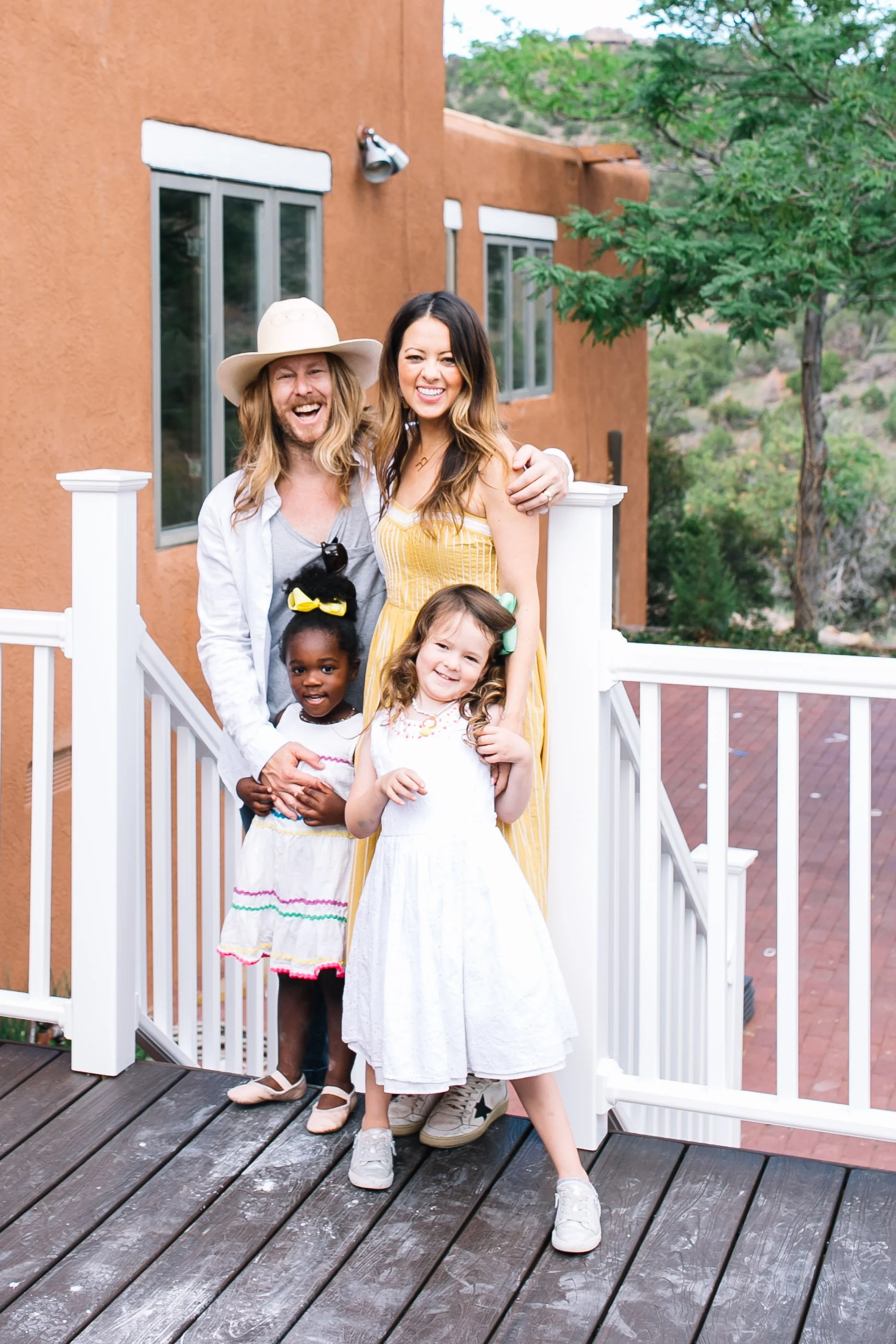
This has become my six-year-old daughter Justice's new favorite thing to tell any adult within earshot when they ask what I do for a living. She recently found out I was a lifeguard in high school and early college, and apparently, she thinks that's the coolest job I've ever had.
I suppose once a lifeguard, always a lifeguard.
She's completely latched onto this identity. Not the rock star thing. Not the marketing work or real estate or serial entrepreneur stuff. The lifeguard.
It's pretty funny, but it got me thinking about identity and what we do for work. I can't help but chuckle because I've worn so many hats over the years. Lifeguard is honestly the only "real job" where I worked for other people. And it was a great one. You get tan. You hang out. You meet girls. Pretty solid gig for a teenager.
But I've done so many things since then. Musician. Restaurant owner. Real estate developer. Marketing Agency founder. Podcast host. Luxury Vacation Rentals. Each chapter brings its own challenges, failures, and unexpected lessons.
Sometimes when people ask me what I do for a living, I have a bit of a panic attack.
What do I say?
Career ADHD? Serial entrepreneur? Professional hat collector?
Maybe I should just go with Justice's version. "I'm a lifeguard." Clean. Simple. No follow-up questions needed.
The truth is, I'm someone who tends to follow curiosity wherever it leads. I start things. I dive into what interests me even when it doesn't make sense on paper. It's led to some of the most incredible adventures of my life.
And some spectacular failures.
I get asked about this constantly. Did you know you wanted to be an entrepreneur? How did you have the courage to pursue music? How did you know what you wanted to do? How did you make such big pivots?
Here's the honest answer: there was never a grand plan for "Jamey's gonna start a bunch of different things and have different careers."
But I've been guided by principles that have shaped those decisions and led to their outcomes.
And here's what I've learned—it all comes down to what you believe about reality. About identity. About who's really in control.
For me, this has crystallized into three principles that have been instrumental in my life:
First, knowing your true identity frees you from the pressure of work defining your worth.
Second, life is short, so pursue what makes you curious rather than what's conventionally safe.
And third, mistakes are not setbacks—they're education and springboards for growth.
I learned these principles the hard way - through real life, real mistakes, and figuring things out as I went. And while they have led me to different careers, they all started with one very clear—and admittedly ridiculous—dream: I wanted to be a rock star.
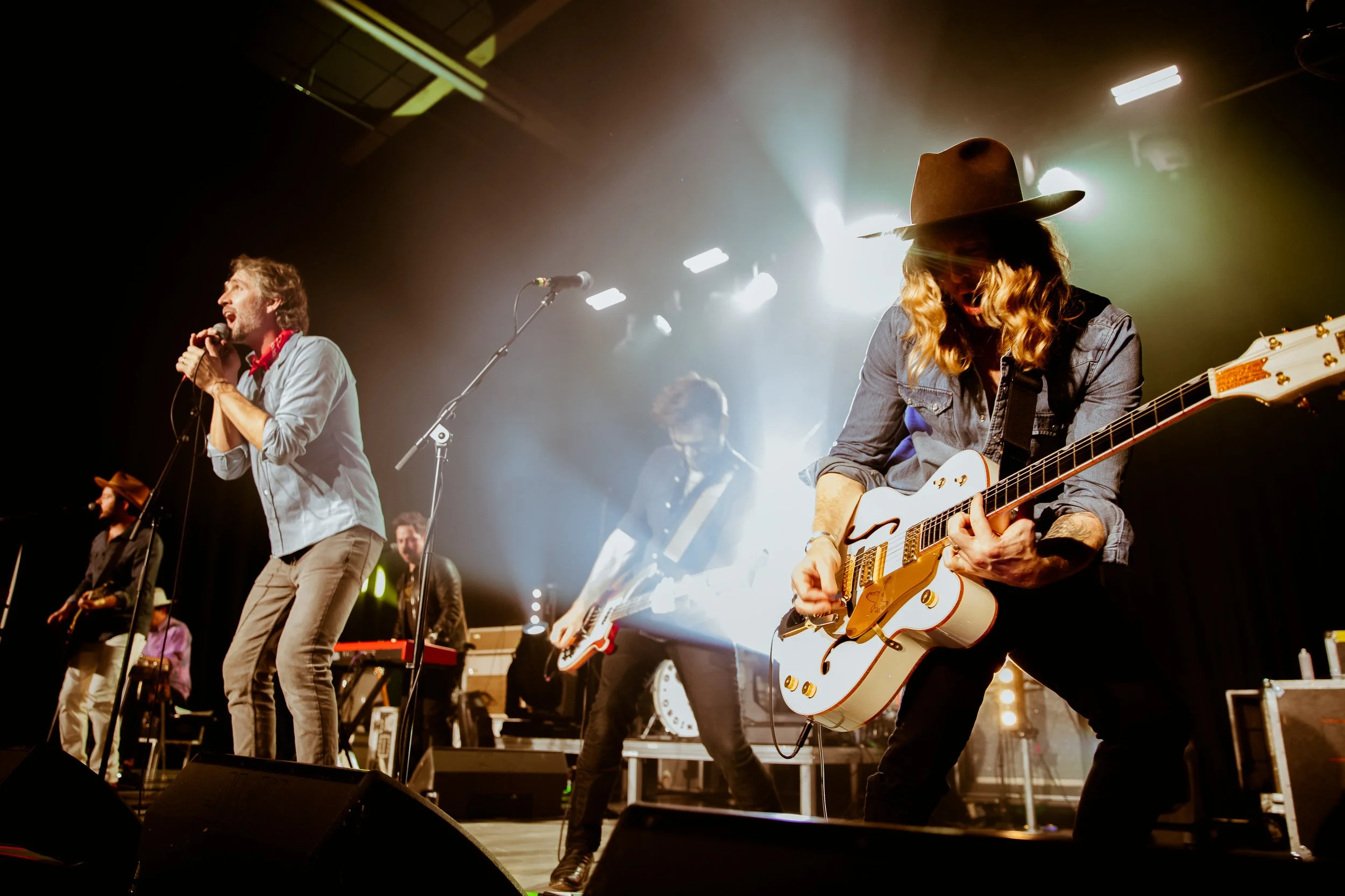
When I was fifteen, my brother Geoff and I started a band called Green River Ordinance. Suddenly, I knew exactly what I wanted to do.
Now, this went against pretty much every piece of conventional wisdom you hear growing up. Go to college, get a degree, get a safe job. But I'd lay in my bed at night, staring at posters on my wall of my rock heroes—U2, The Beatles, Pearl Jam. And I'd think: why not me? What makes them so different?
This was my first real lesson in choosing curious over safe. Even at fifteen, something inside me was saying: you get one chance at this life. When you find something that lights you up, something you could see yourself doing forever, why shouldn't you pursue it?
The band kept going through college. I became a philosophy major, but music was still the dream. With only 18 hours left to graduate, we made the call. Dropped out. Started touring the country.
We were super poor. And I mean poor. The poorest I've ever been in my life. We literally had no money, but we were living the dream. I also got married during this time. Once again, everyone said I was crazy. I didn't have any money. The band still hadn't officially taken off. It didn't make logical sense.
But there I was, saying "I do" to Melissa while barely scraping together rent money. Still super poor. Hamburger Helper and love became our specialty. But man, it was amazing.
This taught me something crucial: you can survive without money. Money doesn't make you happy. Some of my richest memories come from that broke season.
Then Capitol Records happened. We spent the next eight years on the road with Green River Ordinance. Number one songs. Top 10 albums. Living the dream we'd chased since we were teenagers.
But it's never a storybook ending. We also made a lot of mistakes. We didn't manage our money well. We had to fire our booking agent, manager, lawyer, and accountant because of mismanagement of funds. We wound up leaving Capitol Records.
Standing at that precipice of "what do we do now?" I had to dig deep into what I really believed about taking risks. About failure. About whether it was worth it to keep going.
And that brought me back to something that happened in college, a story there that changed everything about how I approach risk.
I was sitting in an existentialism class at TCU, listening to my professor explain thinkers like Sartre and Camus. Their argument: life has no predetermined meaning, so you're free to create your own and live however you want. Ultimate freedom through meaninglessness.
But I found myself thinking: well, that honestly sounds kind of depressing. I felt like my faith perspective gave me way more freedom.
I have long held tight to the belief that God loves me, that He created the universe, that He's powerful, that He's for me, and that I know how the end turns out. There's nothing I can do to shake that. I can't lose his love or my future.
So I raised my hand and posed the question: "What sounds like better freedom? Knowing that life is meaningless so you're free to live however you want, or knowing you have a lottery ticket in your pocket for a billion dollars that you can't lose, so you can live however you want?"
The room got quiet.
That's when it clicked. For me, the faith story isn't just better - it's my guaranteed winning ticket.
Since that day, when facing tough decisions, I ask myself: "What would I do if I was holding a winning lotto ticket in my pocket?"
The answer is always resoundingly clear: chase what you are curious about, there's no need to play it safe.
When you know the end is good, you can take swings that other people won't.
When your identity is rooted in something bigger than your career, failure isn't actually that scary.
Standing there after everything fell apart with the band, I made the decision to take over as manager and booking agent. We had some music we wanted to release, and someone had to figure out how to make it happen.
That was really the moment I became a businessman.
We went for it. Released "Dancing Shoes"—a song the label had hated because it was "too country." It wound up becoming our biggest song to date. Our independent album sold substantially more than our major label album.
The lottery ticket had come through again.
In 2011, I found myself in conversations that started in the most unlikely place—China. My wife Melissa had been taking groups of college students there every year, and we were all sitting in this incredible coffee shop. The atmosphere, the community feel, the way it brought people together—it was unlike anything we had back home.
One of us said, "Man, I really wish there was something like this in Fort Worth."
Of all the places for a restaurant idea to be born—Communist China.
Those conversations continued back home over late-night coffee sessions. We'd stay up dreaming about what this place could be. Eventually, dreaming turned into property searches.
We found an empty ugly building on Magnolia Avenue. Back then, development hadn't pushed nearly as far down Magnolia as it has now. People thought we were crazy. "Too close to Hemphill," they said. "That building is way too rough."
But we could see what others couldn't. There was just one small problem: none of us had any coffee shop experience. No restaurant experience. No bar experience.
But we had big dreams and bigger vision.
BREWED opened in 2012. We designed something beautiful and interesting—warm, inviting, unlike anything Fort Worth had seen. I did the marketing like I'd done with the band—through stories, not sales pitches.
The marketing worked. The space was incredible. People came in droves. It was a huge success and a complete disaster at the same time.
We had tons of people coming through the doors, but we had absolutely no idea what we were doing. The service was horrible. Our menu was confusing and overly ambitious.
But here's where that third principle kicked in: mistakes aren't setbacks, they're education.
Every service disaster taught us something about operations. Every confused customer helped us simplify our menu. Every overwhelmed staff member showed us what systems we needed to build.
We learned. We adapted. We got better. Eventually, we expanded to multiple locations, including Dallas and even DFW airport.
But even as BREWED was growing, we faced a gut-wrenching decision with Green River Ordinance in 2016. Three of us had just had our first kids, and the touring life suddenly felt unsustainable. We were coming off our best year—two number one songs at Texas Country.
But we'd never had that massive, breakthrough U.S. hit. Success, but never fully the dream we'd chased since we were teenagers.
My brain knew stopping was the right decision. But emotionally? It was devastating. Walking away from Green River Ordinance—the dream I'd chased since I was fifteen—felt like losing part of myself.
Then, in 2019, I made another hard decision—I sold out of BREWED.
BREWED had grown. It was successful. I loved being part of it. But 6th Avenue Homes was rapidly expanding, and I wanted to start a marketing company. I couldn't do justice to all of it.
Sometimes you have to remind yourself of truth to get through the hardest moments. That's when those principles become more than just ideas—they become lifelines.
Both decisions taught me that failure isn't the opposite of success—it's part of success. But they also taught me something equally important: sometimes success means knowing when to walk away. When your identity is rooted in something bigger than any single venture, you can make the hard calls that others can't.
By 2014, my best friend from high school and I had both fallen into the same pattern—buy a fixer-upper, renovate it ourselves, live in it for a couple years, sell, repeat.
The Fairmount neighborhood—Fort Worth's oldest—had a mix of neglected historic homes and artists and young professionals who were starting to breathe new life into the area.
One day, a listing popped up on Hawthorne Avenue. A little foreclosure just up the street from us. Listed at $90,000—an absolute steal.
"We have to buy this house."
There was just one problem: we had maybe five grand between us. I was still a musician (albeit more successful at this point but definitely not rolling in cash). He was a cop. And foreclosures were cash-only.
When the agent asked if we had the cash, we stretched the truth.
"Yep, we've got it."
We signed the paperwork, put down our $5,000—nonrefundable—and then panicked.
Finally, I found a local investor who agreed to lend us the money at 14% interest. Highway robbery, but we had no choice.
We did all the work ourselves—late nights, weekends, learning as we went. Ninety days later, we'd transformed that little house and sold it to a young family. We made some money and were completely hooked.
Over the next few years, we went on to buy, sell, or renovate over 120 properties on the Near Southside.
But something unexpected started happening. I'd been posting our renovation projects on Instagram—not as marketing, just because I was excited about what we were doing. People started following our work. Then they started calling.
"Can you help us buy a house like this?"
"We love what you're doing. Can you help us find something?"
We kept saying, "We're not a real estate company. We just flip houses."
But the market was telling us something different. There was a whole group of people—mostly millennials—who didn't want cookie-cutter houses. They wanted something original. Something with character.
The traditional real estate industry wasn't serving them. Everything was suit-and-tie, stuffy, focused on mansions and move-in ready.
So in 2016, we said, "Fine. Let's start a real estate company."
Neither of us even had real estate licenses yet. But we created a one-stop shop to help people buy, sell, design, and renovate. We gave clients whiskey bottles at closings. We threw house concerts instead of open houses. When new families closed on their homes, we'd go and pray over the houses with them.
The company that started with a $5,000 stretch of the truth now has 70 employees and multiple locations.
By 2020, 6th Avenue Homes was thriving. I'd sold out of BREWED the year before to focus on the real estate company.
But I'd been fighting the same battle for years. Between all my businesses, I'd hired and fired more marketing companies than I could count. Every agency in Fort Worth and Dallas, it felt like.
They could make me a logo. Build a website. Run some ads. But they always missed the point.
Social media was instrumental to our success—it's what built our following for the band, packed BREWED with customers, turned house flipping into a real estate company. But every time I tried to hand it off, it would fall flat.
The problem was simple: nobody took the time to understand our story.
I'd been believing for years that story is what sells. Pretty graphics matter—they make you feel something. But they don't sell things. Stories do.
Meanwhile, these agencies kept offering piecemeal solutions. "You need SEO." "You need better ads." "Here's the magic bullet."
But small businesses don't need one thing. They need a comprehensive plan.
We started joking: "We should just start our own agency."
Then COVID hit.
Suddenly, the world shut down. Small businesses were panicking. Everyone was asking the same question: "How do we survive this?"
I had a choice. Play it safe—keep my head down, focus on real estate, wait for things to get back to normal.
Or follow what made me curious.
Every small business owner I knew was desperate for exactly what we'd been joking about building. They needed someone who understood their story. Someone who could help them connect with customers when everything felt uncertain.
So in April 2020, right in the middle of a global pandemic when everyone else was shutting down, I launched 6th Avenue Storytelling.
Everyone thought I was crazy. "You're starting a marketing company during a recession?"
But that lottery ticket philosophy kicked in again.
Even if we failed completely, I knew we could rebuild. My identity wasn't wrapped up in being "the marketing guy"—it was rooted in something bigger.
And here's what happened: the phone started ringing.
All those years of "mistakes" suddenly became education. The three principles that had guided every major decision were working again—my identity wasn't tied to any single career, curiosity was trumping safety, and every failed agency hire had taught me something valuable.
We built something called The Storytelling Pathway - everything I'd learned about marketing in fifteen years, organized into something that actually worked.
What I realized was this: small businesses don't just need social media. They need clarity. They need a framework. A roadmap.
The marketing world is full of silver bullets—SEO, ads, branding, websites, funnels. Everyone's selling a solution. But small businesses don't need one thing.
They need a toolbelt.
What started as a pandemic Hail Mary became a thriving company. Over the past four years, we've helped hundreds of small businesses tell their stories and grow. I also launched a podcast called Stories with Soul—something I'd dreamed of doing for years but never tried.
Once again, I found myself in a completely different identity. Musician became restaurant owner became real estate developer became marketing consultant.
Each transition taught me the same thing: you don't have to stay in one lane forever. Reinvention isn't just possible—it's powerful.
So here's what I've learned after forty years of wearing different hats: the question isn't "What do I want to be when I grow up?"
The question is "What makes me curious right now?"
Whether you're 22 and panicking about picking the perfect career, or 45 and wondering if it's too late to change course—you're asking the wrong question.
You don't need a master plan. You need the courage to take the next right step.
You don't need to have it all figured out. You need to know who you are when everything falls apart.
And here's the secret: you're already holding the winning lottery ticket.
You just have to be brave enough to use it.
I believe that the God who created you loves you. Has a plan for you. Is ultimately in control.
That means you can't lose in any way that truly matters.
So chase what makes you curious. Bet on yourself when others play it safe. Treat mistakes as education, not verdicts.
Your work doesn't define you—but that doesn't mean it doesn't matter. Do something that lights you up. Solve problems that fascinate you. Build things that make the world a little better.
And if all else fails, just tell people you're a lifeguard.
Because maybe that's what we're all doing anyway—keeping people safe, watching over our communities, making sure nobody drowns on our watch.
Maybe Justice has it right after all.
"My dad is a lifeguard."
Simple. Clear. No follow-up questions needed.
Maybe the best identity is the one that keeps people safe—in whatever form that takes.
Everything else? Just details.