

 Image 1 of 2
 Image 2 of 2
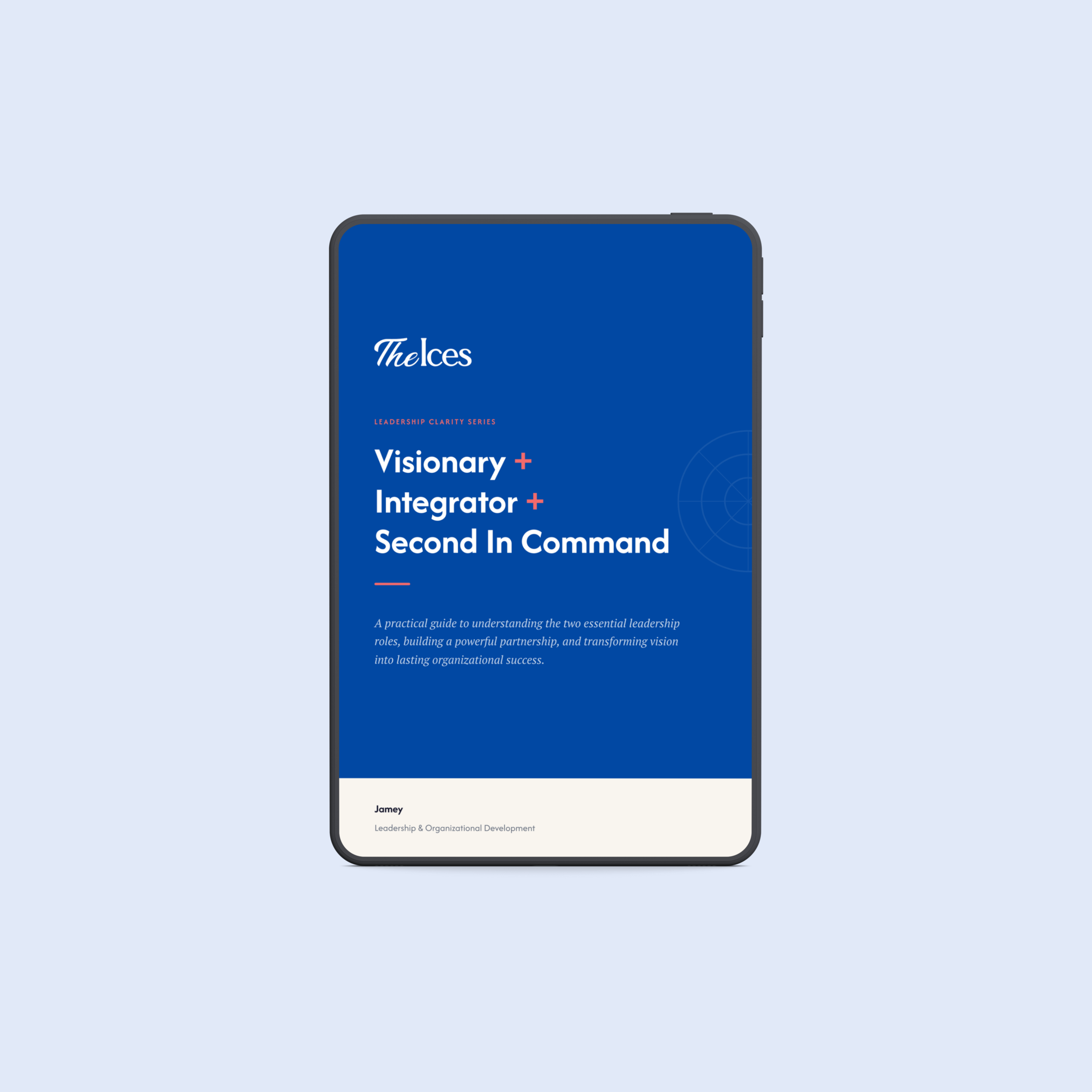
This guide is really about understanding the two roles that make a business work — the one casting vision and the one making sure it actually happens.
A lot of people try to do both, especially early on. And for a while, it works. But eventually things start to feel off. Too many ideas, not enough follow-through, or a team that’s not fully clear on what matters most.
This walks through what each role actually looks like in real life — where Visionaries tend to thrive, where they get stuck, and what an Integrator really does beyond just “keeping things organized.” It also gets into where the tension usually shows up between the two, and why that’s not a bad thing when it’s handled the right way.
There are some practical tools in here too — simple exercises and frameworks you can actually use. Things like getting clear on where your time should go, cutting out the noise, and creating better rhythms so you’re not constantly reacting.
At the end of the day, this is about getting back on the same page. When the Visionary is focused on where things are going and the Integrator is focused on how it gets done, everything just works better. Less friction, more clarity, and a lot more forward movement.
If things have felt a little scattered or harder than they should be, this will help you step back, reset, and move forward with more structure and alignment.
This guide is really about understanding the two roles that make a business work — the one casting vision and the one making sure it actually happens.
A lot of people try to do both, especially early on. And for a while, it works. But eventually things start to feel off. Too many ideas, not enough follow-through, or a team that’s not fully clear on what matters most.
This walks through what each role actually looks like in real life — where Visionaries tend to thrive, where they get stuck, and what an Integrator really does beyond just “keeping things organized.” It also gets into where the tension usually shows up between the two, and why that’s not a bad thing when it’s handled the right way.
There are some practical tools in here too — simple exercises and frameworks you can actually use. Things like getting clear on where your time should go, cutting out the noise, and creating better rhythms so you’re not constantly reacting.
At the end of the day, this is about getting back on the same page. When the Visionary is focused on where things are going and the Integrator is focused on how it gets done, everything just works better. Less friction, more clarity, and a lot more forward movement.
If things have felt a little scattered or harder than they should be, this will help you step back, reset, and move forward with more structure and alignment.